
Area Rug Cleaning Beaverton OR
Pickup and full plant washing for the wool, Persian, and Oriental rugs Portland-area homes are built around — and honest in-home cleaning for the synthetics that don't need the plant.
Beaverton, OR and Portland's west side · Calls may be recorded for quality and training purposes.
The Portland area is a rug town, and Beaverton lives that fully. The default west-side floor plan — hardwood or engineered wood through the main rooms, softened with area rugs — means the rug is often the single most valuable textile in the house: a hand-knotted Persian inherited from a grandparent, a Turkish piece carried home from a trip, a flatweave found at one of Portland's rug dealers, or simply the wool rug that has anchored the living room for twenty years. These are not disposable floor coverings, and they should not be cleaned like wall-to-wall carpet. Our area rug cleaning in Beaverton, OR is built around that distinction.
The first decision happens before any water: does this rug get cleaned where it lies, or does it go to the plant? Get that call wrong and the "cleaning" becomes the damage — wool washed like synthetic carpet browns and sours, viscose collapses into a matted shadow of itself, jute ripples and never flattens, and a tufted rug with a glued backing can trap moisture and delaminate. We identify what the rug actually is, then route it accordingly, and we tell you which route it is getting and why before anything is scheduled.
The split runs roughly like this. To the plant: hand-knotted wool — Persian, Turkish, Oriental, tribal — whose foundation holds pounds of fine dry soil that only mechanical dusting removes; tufted wool with glued backings that cannot be saturated in place; delicate viscose and "art silk" that tolerate only careful low-moisture handling; and anything with pet urine in a natural fiber, which needs a true immersion flush. Cleaned in your home: machine-made synthetics — polypropylene, polyester, nylon — which take hot-water extraction happily and dry in hours, usually as an easy add-on to a carpet visit. Dry methods only: jute, sisal, and seagrass, plant fibers that brown and shrink when soaked. Specialist referral: cowhide and sheepskin, which are tanning questions, not textile ones.
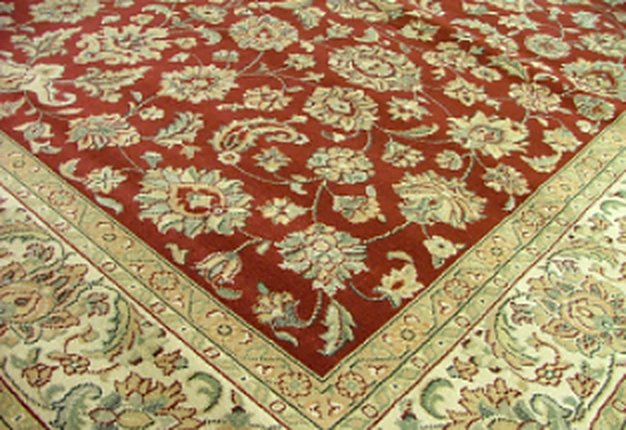
What a real plant wash involves
- Inspection and dye testing. Fiber, construction, existing damage, and every color checked for stability before water touches the rug. Unstable dyes reroute the rug to a low-moisture or controlled-pH process instead of a gamble.
- Dusting. Mechanical vibration shakes years of dry grit out of the foundation — the soil a vacuum physically cannot reach. In a market where rugs live at entries through eight wet months a year, this step routinely removes a startling amount of fine tracked-in silt, and it is the step that separates a wash from a wipe.
- Wash. Immersion or flat washing with wool-safe, pH-appropriate detergent — gentle surfactants, never the high-alkaline chemistry that strips lanolin and leaves wool harsh and brittle.
- Rinse until clear. A thorough rinse matters as much as the wash, and the Portland area's famously soft water is a quiet advantage here: with almost no mineral load, detergent rinses out completely instead of leaving a sticky residue that re-attracts soil. Urine flushing, when that is the assignment, happens at this stage too.
- Controlled flat drying. In a climate-controlled drying room with moving air — never draped wet over a fence or a railing, which stretches the foundation and invites mildew. In this climate, controlled drying is not a luxury; it is the difference between a clean rug and a ruined one.
- Finish work. Fringe cleaned and combed by hand, pile groomed in the direction of the nap, and a final inspection before the return trip.
Why wool asks for this much care
Wool is the reason the plant exists. Each fiber is a scaled, lanolin-coated protein strand — closer kin to your own hair than to the polyester in a family-room carpet — and that structure is why a good wool rug hides soil for years, springs back underfoot, and lasts generations. It is also why wool punishes shortcuts. High-alkaline carpet detergents strip the lanolin and leave the fiber dull and harsh. Over-wetting without controlled drying causes cellulosic browning along the foundation and, in the worst cases, mildew. Aggressive scrubbing felts the pile. Chlorine chemistry dissolves wool outright. Every step of the plant process — the neutral chemistry, the gentle agitation, the obsessive drying — exists because of what wool is. The reward for doing it right: a properly washed wool rug does not just look cleaner, it feels different underfoot, because the fiber is finally free of years of embedded grit.
What Beaverton's wet season does to rugs
From October to May, everything that enters a west-side house arrives damp. Even in a shoes-off household — and this is shoes-off country — the entry rug takes the tracked-in rain, the fine wet grit, and the dog's first four steps after every walk. That grit settles through the pile into the foundation, where it works like sandpaper every time the rug is walked on: the fiber wear on a never-washed rug is mostly abrasion from below, not traffic from above. The damp itself adds a second, quieter risk. A rug that stays moist — at a leaky entry, under a planter, beneath the dog bed — can mildew, and wool that mildews long enough dry-rots into a foundation that tears like paper. It can also hold moisture against the hardwood underneath and leave a clouded shadow on the finish. The practical schedule that falls out of all this: entry and high-traffic rugs deserve a wash every year or two, living-room rugs every two to four, and any rug that has been through a soaking — burst pipe, forgotten window, over-watered plant — needs attention now, not at the next spring cleaning.
Moths, and the other quiet rug killer
Wool moths are a real presence in older Portland-area housing stock, and they are specialists: they eat protein fiber, they prefer dark, undisturbed, slightly damp conditions, and their favorite meal is the part of a wool rug that sits under the sofa and never gets vacuumed. The telltale signs are gritty sand-like debris in the pile, bare patches with the foundation showing, and papery casings on the rug's back. A full immersion wash removes eggs and larvae outright — it is the non-chemical moth treatment — and it is worth doing before storing any wool rug. If you are rolling a rug up for storage, have it washed first, wrap it in breathable material (never plastic), and store it somewhere dry and occasionally disturbed.
Two minutes to identify your own rug
Flip a corner. A back where the pattern shows crisply through slightly irregular knots is hand-knotted — the real thing, worth plant care. Machine-perfect rows of uniform stitching mean machine-made. Check the fringe: woven into the rug's own body means hand-made; sewn on as a decorative strip means machine-made. Pile that feels warm, springy, and slightly oily is wool; blindingly shiny, limp, and constantly shedding is viscose. A stiff back with visible glue or a scrim fabric means tufted construction. Still unsure? Describe front, back, and fringe on the phone and we will tell you what you likely own and what it needs — before you pay for anything.
When not to buy the plant wash
Some rugs should not get the full treatment, and we would rather say so on the phone than at the invoice. A machine-made polypropylene rug from a big-box store cleans up fine in place for a fraction of the price. A viscose rug that has already matted and yellowed will not come back to showroom condition no matter who washes it, and we will not pretend otherwise. A rug with heavy dry rot may be past washing and into repair — or retirement. And a worn-through synthetic is a replacement conversation, not a cleaning one. The plant wash is for rugs whose fiber, construction, or meaning justify it; the phone call sorts that out honestly in two minutes.
Rug pricing in Beaverton
Plant washes are priced per square foot by fiber and condition — synthetics at the low end, hand-knotted wool with full dusting and hand-finishing at the top, with urine flushing and moth treatment as clearly itemized add-ons. Pickup and delivery inside the Beaverton area are included on full-service washes. In-home synthetic cleaning is a modest add-on to any carpet visit. Call (503) 479-4076 with the size and what you know about the rug, and the range takes a minute. Oregon law permits recording telephone calls with the consent of one party.
Get a Free Quote
No obligation · about a minute by phone
Frequently Asked Questions
Do all rugs have to be picked up, or can some be cleaned at my house?
How long is a rug gone for an off-site wash?
Will the reds bleed in my Persian rug?
The rug smells like wet dog even when the dog is dry. Can a wash fix that?
My rug was $180 online. Should I even clean it?
Can a wet winter actually damage a rug that just lies there?
Do you provide rug pads?
Rug pickup in Beaverton this week
Call (503) 479-4076 to schedule — pickup and delivery included on plant washes across Beaverton, Aloha, Cedar Mill, and Portland's west side.